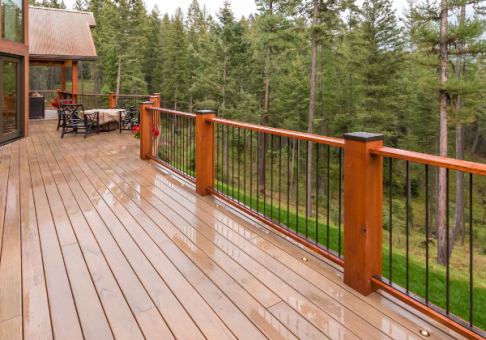
Outdoor Deck Remodels
We consult and install all types of Outdoor Decks. Decks provide the ideal outdoor space for relaxing or entertaining. They also add to your home’s beauty and value. In addition, decks are relatively inexpensive and can be completed faster compared with other home additions. With our years of experience we can help you select the perfect deck solution that will bring your home renovation vision to life. If you’re ready to launch your remodel project contact us today for a quote!
Attached Deck
Perhaps the most common type of deck is one that is structurally anchored to the home. It usually is designed as an extension to an existing room, such as a dining room, kitchen, or family room, and is accessed by doors that allow free passage between the indoor and outdoor spaces.
This is a broad category that can include both simple ground-level platforms or multi-level structures complete with stairways and landings. What is common to this type of deck is that it is structurally attached to the house by means of a ledger board that is firmly anchored to the home’s framing. This type of engineering means such decks are very solid and strong.
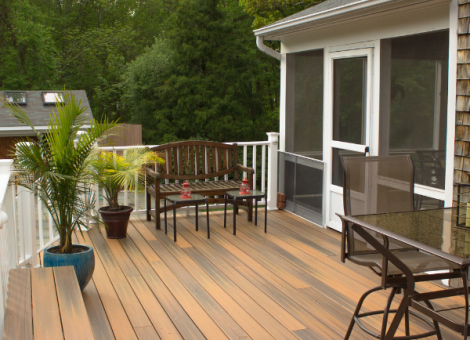
Attached Deck
Wraparound Deck
Structurally, a detached deck is exactly the opposite of an attached deck. It is not attached to a permanent structure at all, but is built freestanding somewhere in the yard, often linked to the house via a pathway. Sometimes called “floating decks” or “platform decks,” these structures can often be built without the elaborate footing-post-beam structure required by an attached deck.
On a relatively level building site, detached island decks can be literally floating, resting on concrete blocks or simply on the ground itself. Or, if the building site is not flat and level, they can be constructed with traditional footings and short posts that support beams and structural members.
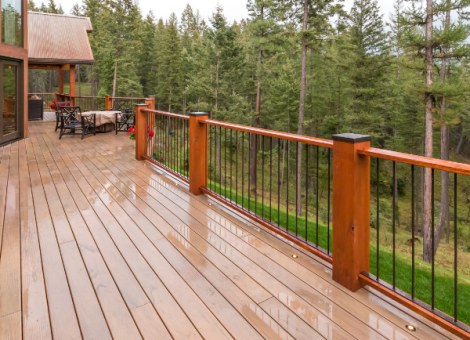
Wraparound Deck
Entryway Deck
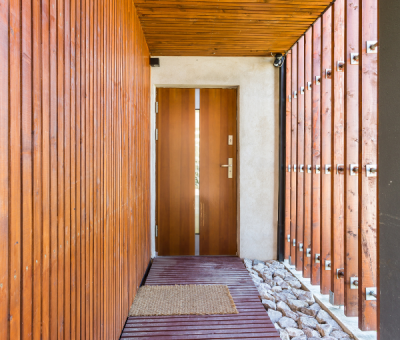
Entryway Deck
Building an entryway deck is a good way to create a more welcoming entrance to your home, and can also provide functional space for visiting guests or just enjoying a pleasant evening with neighbors.
An entryway deck can be similar to a front porch but without the full enclosure. Or, it can be designed as a series of steps and platforms that add to your home’s architecture. This type of deck also sometimes has built-in benches or planter boxes, and each element can be made of wood or durable composite materials.
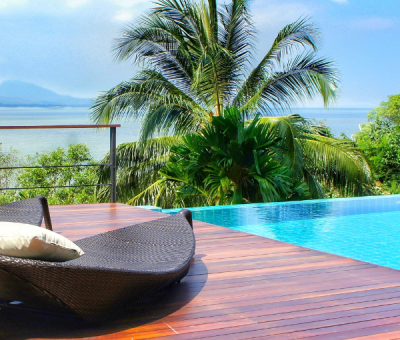
Swimming Pool Deck
Swimming Pool Deck
Decking is a great choice around a pool because it’s slip-resistant and doesn’t get as hot as patio masonry materials like stone or concrete. Wood or composite decking is also a simple way to make an above-ground pool more easily accessible. Deck surrounds create more space for swimmers to lounge by the pool and offer a place for parents to keep a poolside watch on swimming children.
Structurally, a pool-side deck is often constructed so it simply rests on the existing concrete apron around the pool. But decks are sometimes constructed around above-ground pools to create the illusion of an in-ground installation. In this kind of application, the poolside deck can even be an attached deck that extends out from the house to surround an above-ground pool.
Multi-Level Deck
A multilevel deck is a series of several separate decks on individual levels that are connected by stairways. The terrain often dictates the need for a multilevel deck: Hills, slopes, and rocky landscaping may not be able to accommodate any outdoor living spaces except by constructing a series of decks offset at different heights. It’s easier and more budget-friendly to build a deck over a sloped or rocky area than to level the land for a patio.
A multilevel deck can include segments that are anchored to the house as attached decks, as well as detached areas that are linked with stairways.
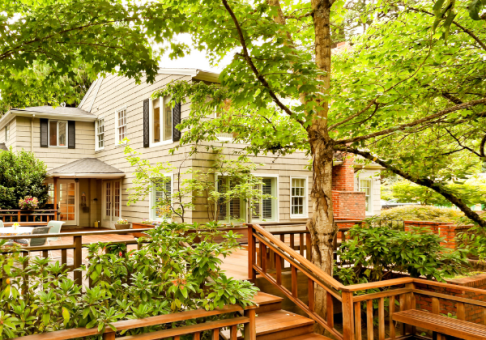
Multi-Level Deck
Floating Deck
Structurally, a detached deck is exactly the opposite of an attached deck. It is not attached to a permanent structure at all, but is built freestanding somewhere in the yard, often linked to the house via a pathway. Sometimes called “floating decks” or “platform decks,” these structures can often be built without the elaborate footing-post-beam structure required by an attached deck.
On a relatively level building site, detached island decks can be literally floating—resting on concrete blocks or simply on the ground itself. Or, if the building site is not flat and level, they can be constructed with traditional footings and short posts that support beams and structural members.